is the big sur international marathon hard?
 By PaceKit Team · Updated April 2026 · 2 min read
Yes. Big Sur is one of the hardest marathon courses in the United States. 2,188 feet of total climbing, 16 miles of direct wind exposure, almost no spectator access, and the most demanding terrain hits after the halfway point. We rate it 5 out of 5 on difficulty, with a composite score of 67.4 out of 100.
But "hard" is doing a lot of work in that sentence, and the way Big Sur is hard is different from what most people expect.
The climb gets all the attention. Hurricane Point, miles 10 through 12, is 513 feet of gain over 2.15 miles at a 4.52% average grade. It's steeper and longer than Heartbreak Hill. Crosswinds on that headland have been clocked above 100 mph. It is, by any measure, a serious climb in serious conditions. But Hurricane Point is not where most people's races fall apart. It's too early, too dramatic, too obvious. You prepare for it. You brace for it. You get through it.
The hard part is what comes after.
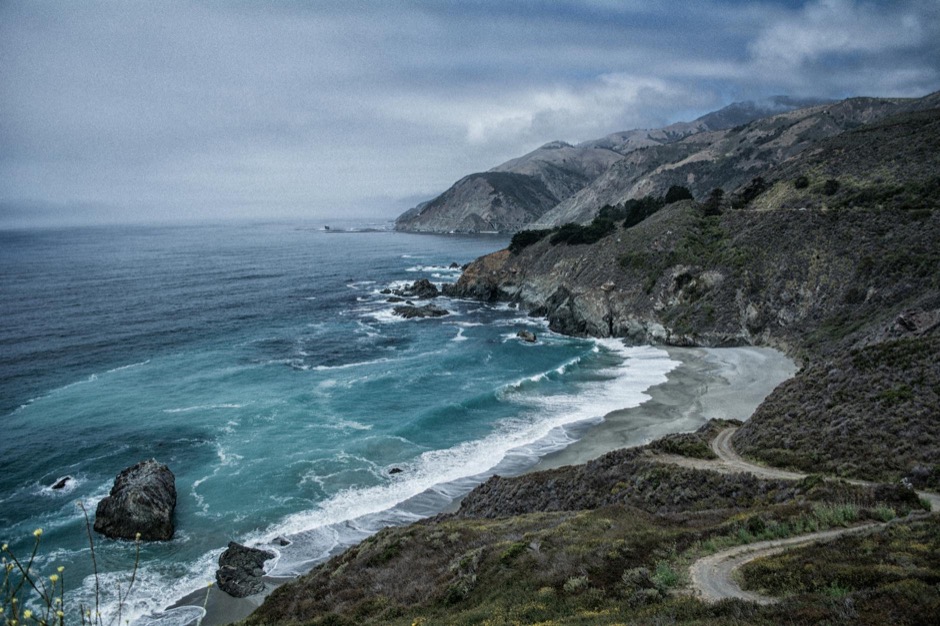
From mile 14 to mile 21, you run through seven climbs and five descents on exposed coastline with an average of 8% shade, a persistent NW headwind, and zero spectators. Highway 1 is closed to the public, which means no crowd noise, no family, no energy from outside yourself. The nature that once twinkled with pink-sunrise beauty now coldly watches you stumble through the rolling hills. That stretch is where most runners report hitting the wall, and it's not because of any single climb. It's the accumulation. The steady wind. The quiet. The fact that you still have 5 to 10 miles to go and the terrain just will not flatten out.
A few numbers for context. The climbing load on this course is 84 feet per mile. For comparison, a flat marathon like Chicago has essentially zero. Boston, which is famous for its hills, has about 35 feet per mile. Big Sur has more than double that. And the distribution is brutal: 20 out of 20 on our placement score, meaning the hardest terrain is backloaded into the second half of the race.
There are also six named climbs on the course, including the Carmel Highlands Kicker at mile 22 (5.59% grade, the steepest on the course) and D-Minor Hill at mile 25 (5.12% grade, named for its ability to bring you down). These aren't long, but they arrive at exactly the point in a marathon where your legs have nothing left to give.
One more thing that makes Big Sur uniquely difficult: it's lonely. Most major marathons have spectators lining the course for the entire 26.2 miles. Big Sur has moderate crowd support at the start and finish, and essentially nothing in between. From mile 3 to mile 21, it's you, the road, and whatever you brought mentally. Runners who thrive on external energy should know this going in.
"My legs felt completely trashed... I sank into a rhythm that felt sustainable" is how one runner described the miles between Bixby Bridge and Carmel Highlands. That tracks. Sustainable is the right word. The goal for most of this course isn't speed. It's survival with enough left to finish.
So is it hard? Very. But it's hard in a way that favors patience, preparation, and respect for the course rather than raw fitness. Plenty of first-time marathoners finish Big Sur every year. They just need to know what they're signing up for.