hurricane point: the full breakdown
 By PaceKit Team · Updated April 2026 · 2 min read
Hurricane Point is a 2.15-mile climb from mile 9.85 to mile 12.0, gaining 513 feet at an average grade of 4.52%. It is the signature feature of the Big Sur Marathon, and it is named after the wind.
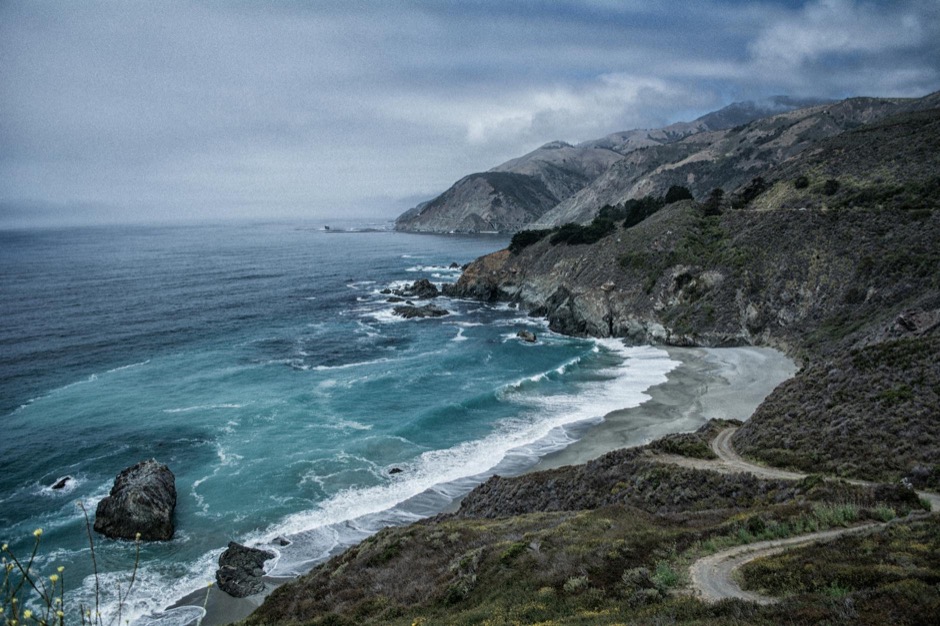
Here's why it's called that. Hurricane Point is a headland, a piece of land that juts directly into the Pacific Ocean at 560 feet of elevation. The prevailing NW coastal wind that runs along the California coastline accelerates as it wraps around headlands like this (a compression effect called the Venturi effect), and can hit 2 to 3 times the speed of nearby areas. The point is open to the north, south, and west. There is no terrain blocking any of it. Bare ocean wind hits bare cliff face with nothing to slow it down. NOAA identifies Point Sur, just to the south, as a major wind acceleration headland. Hurricane Point sits in the same corridor.
Crosswinds on race day have been clocked above 100 mph. That's the extreme end, but even on a "good" wind day, runners should expect sustained gusts of 15 to 30 mph with periodic stronger blasts. The wind hits from the left-front (NW) for most of the climb.
What runners say about it:
"My arms became numb from the windchill. The sound of the wind was deafening."
"The combination of steep climb plus 50mph gusts made it feel like we were running in place."
But also: "It looked long but actually passed by really quickly, probably due to the incredible views."
That last quote matters. Hurricane Point is hard, but it's also visually spectacular, and it comes early enough in the race (miles 10 to 12) that most runners still have the physical and mental resources to handle it. The Taiko drummers positioned at mile 11, volunteering since 1987, help. You hear the drums before you see them, and their sound carries through the headland in a way that's become one of the most iconic moments in American distance running.
how it compares
Boston's Heartbreak Hill averages about 3.5% grade over 0.4 miles. Hurricane Point averages 4.52% over 2.15 miles. It is steeper, more than five times longer, and significantly more exposed. This is not a comparison most pre-race guides make explicit, but it's useful for calibrating expectations.
how to run it
Budget 30 to 45 extra seconds per mile on this climb versus your goal marathon pace. Run entirely by effort, not pace. If your GPS watch says you've slowed down by a minute per mile, that might be exactly right. The aid station at mile 10.4 sits at the base, and there's a GU gel station at the summit (mile 12.2). Hit both.
There is a 3-mile gap between the aid station at mile 7.8 and the one at 10.4. This means you want to go into Hurricane Point fully fueled and hydrated. The mile 7.8 station is the one to take seriously. Top off. Take a gel if it's time. You don't want to be thinking about fueling on a 4.5% grade into a headwind.
The summit sits at 563 feet above the Pacific. From there, you can see Bixby Bridge ahead and below, and the coastline stretching north toward Carmel. From one runner: "As soon as we rounded the point, the wind started to drop miraculously." Then the descent begins: 298 feet down at a 5.5% grade, and at the bottom, a pianist in a tuxedo playing a Yamaha grand piano on the most photographed bridge in California.
The real message about Hurricane Point is this: it is not the hardest part of the race. It's the most dramatic part. The seven miles that follow, rolling, exposed, empty, are where races actually come apart. Hurricane Point is the headline. The post-Bixby coastline is the story.